Why Is My AI So Slow? Go Faster with EvoX AI Harness
Compares local generations against cloud-based EvoX AI Harness performance using Kimi K3 versus GPT-5.6 Sol, demonstrating advanced controls, self-evolution, and swarm agent capabilities.

Videos
Find videos about LLM models, hardware, runtimes, benchmarks and practical AI workflows.
Compares local generations against cloud-based EvoX AI Harness performance using Kimi K3 versus GPT-5.6 Sol, demonstrating advanced controls, self-evolution, and swarm agent capabilities.
Locally installs and tests Serena, providing essential semantic code retrieval, editing, refactoring and debugging tools.
Demonstrates offloading experts for Qwen 3.6 35B-A3b on llama-server with 8GB VRAM, covering 12GB corrections, layer offload sweeps, and Bob-bench Wide evaluations.
Introduces model Jev, which uses RLCD, standing for Reinforcement Learning for Calibrated Decisions.
Demonstrates building a RAG system with LangChain, RAGWire, and Qdrant using Amazon and Google 10-K filings, covering hybrid search, metadata filters, cited answers, and custom agents with memory.
Compares local Qwen3.8-27B with cloud models for TestSprite AI testing efficiency during tool calls, test generation, result analysis and iteration.
Tests Atria Dawn Preview, an agentic model by Shanghai Artificial Intelligence Laboratory, demonstrating continuous environmental understanding in real tasks.
Installation guide for running YuE2 in ComfyUI to generate music and create cover songs using text prompts, instrumental settings, reference audio, and agent iterative editing.
Claude Code uses a custom skill to directly control screens via LLMs, automating setup, staging, testing, and driving agents through hard rules and control loops.
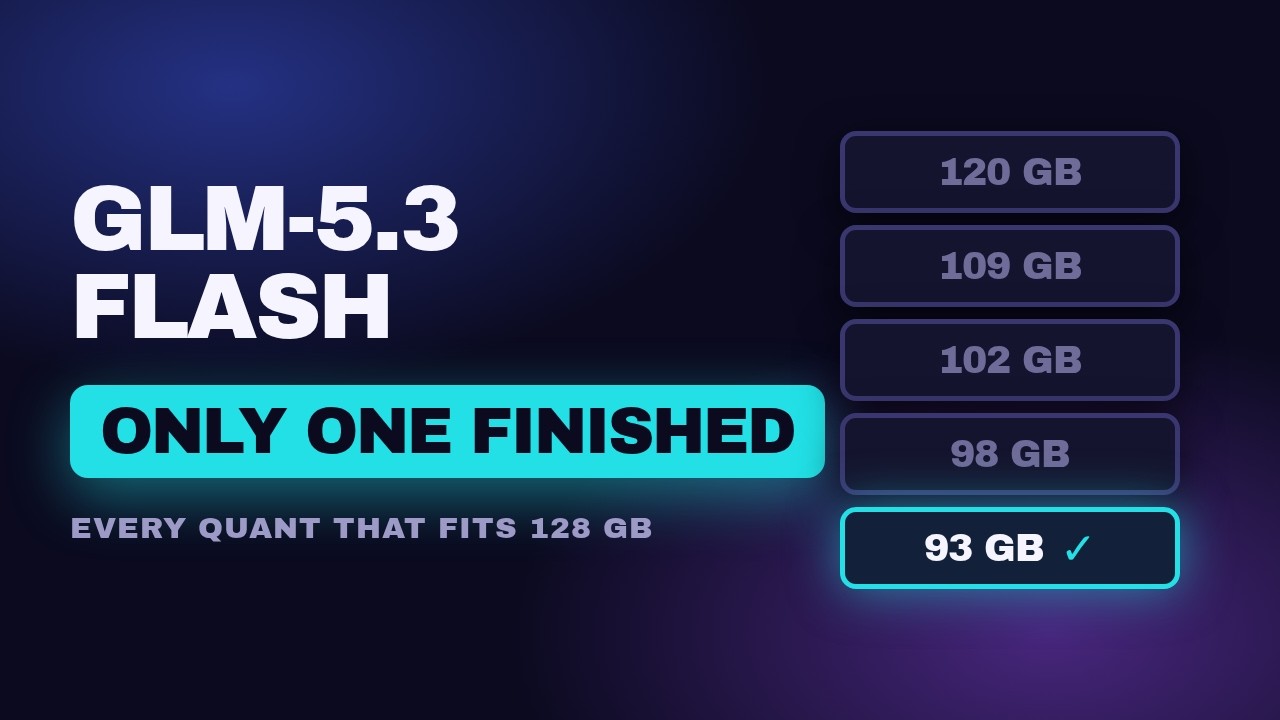
Locally installs and tests the pfeifferj/GLM-5.3-Flash-GSQ-RCO-GGUF variant using GSQ and RCO quantization methods.
Coding competition evaluating Ornith-1.5-9B, Spark-X2.5-4B, and IBM's Granite-4.2-8B on automating mundane, repetitive tasks using OpenCode GPU sidebar plugin and VoxCtrl.
Tests oMLX v0.7.0.dev2 with Qwen3.8-Flash-Next 125B MoE on an M5 Max with 128GB unified memory, measuring inference speeds up to ~70 tokens/sec.
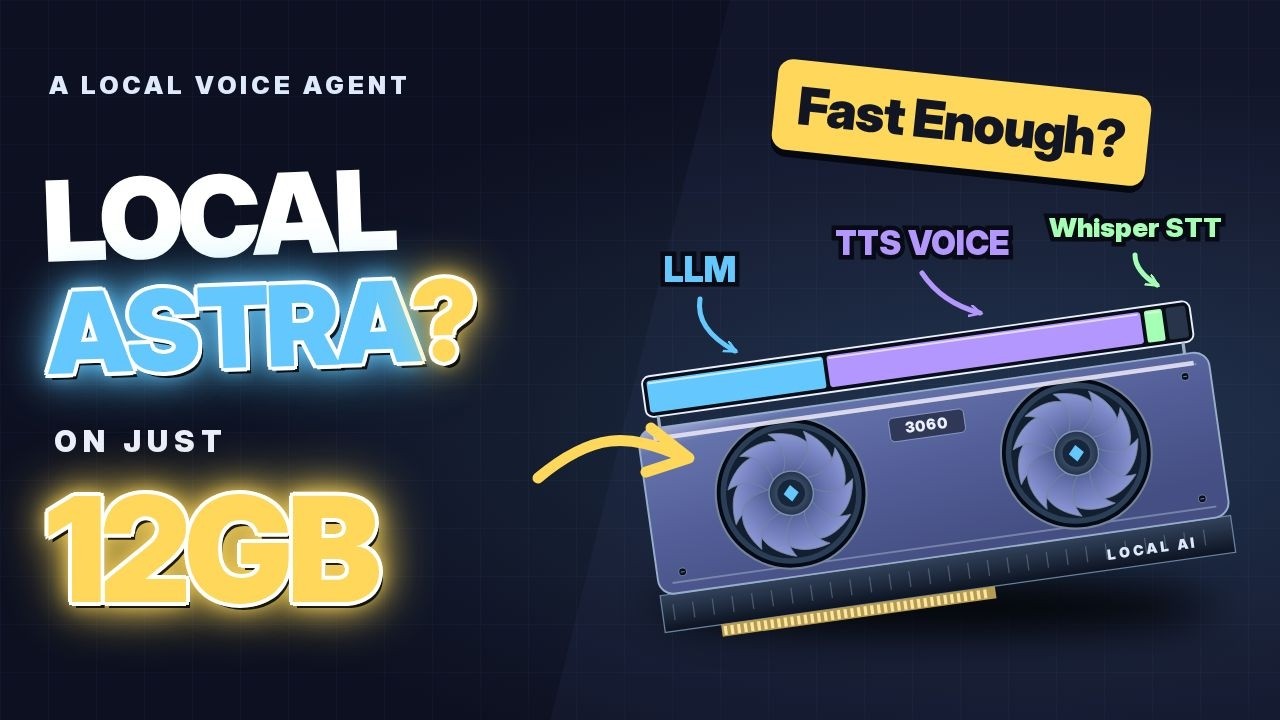
Demonstrates optimizing a local voice agent in Pithagoras using Qwen3.6-35B-A3B, Breeze-TTS-2, Whisper, and Silero VAD on an RTX 3060 via overlapping pipelines and quantization.
Tests Cognition SWE-2 performance on browser workflows, C++ games, Blender, Godot, robot arms, FPS dev, 3D models, and frontend design.
Tests performance, memory, reasoning, OpenAI Human Eval, Kanban, Sand Physics, Dungeon Crawler, Blender and Godot for unsloth/Qwen3.8-Flash-Next-GGUF on a 16GB local setup.
Runs unmodified NVIDIA CUDA applications on AMD GPUs using ZLUDA and ROCm/HIP via the CUDA-for-AMD-Windows project.
Evaluates entirely-in-VRAM configurations for 16GB GPUs using Base Qwen and Qwen 3.8 27B GSQ-RCO against unsloth quants, demonstrating live iOS coding performance.
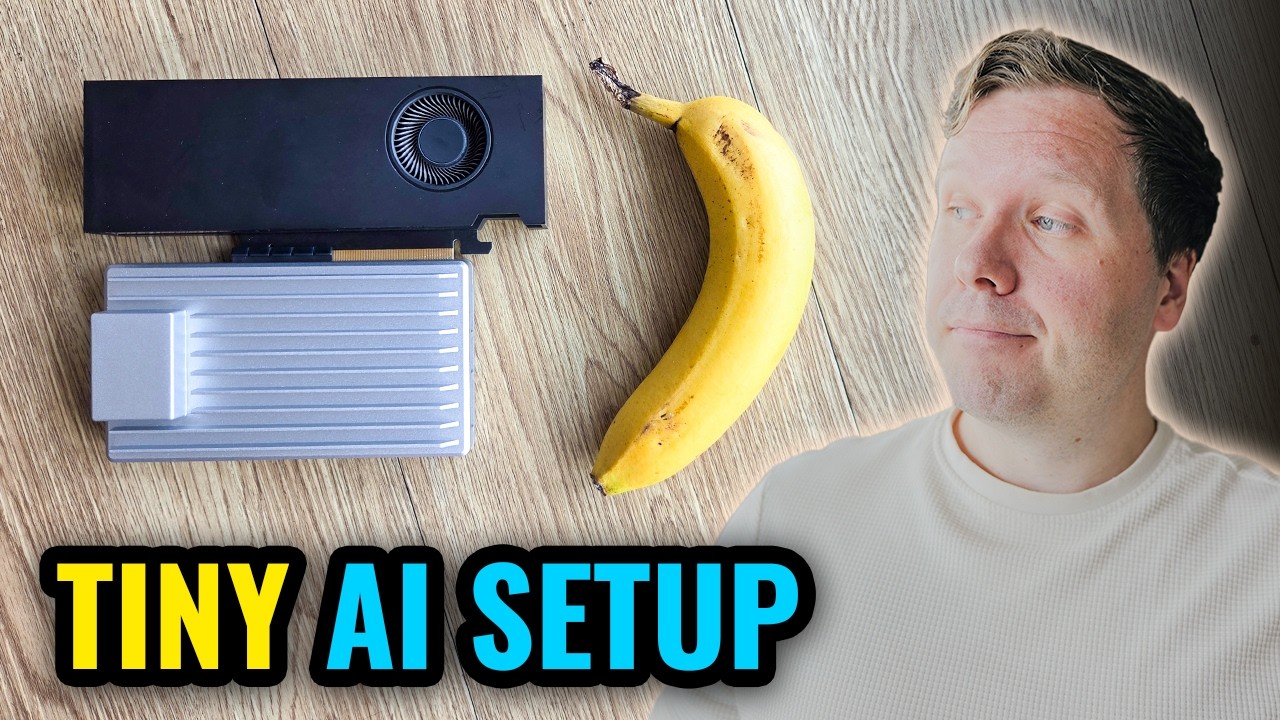
A 27B model runs on a hand-sized PC while evaluating integrated graphics, GPU upgrades, model optimization, connection bandwidth, and testing pitfalls.
Installs and tests NeoHorse-1-4B, described as an initial prototype on the path toward recursive self-improvement (RSI).
Covers Deepseek v4.1 Flash, AlphaGenome Atlas, AuK, YuE2, Navier Stokes solution, Lingbot World 2, Marigold v2, Unimate, Isaac 0.5, World Sculpt, Fire3D, Show Harness, Edge0, RealSWE, Suno V6, GPT for
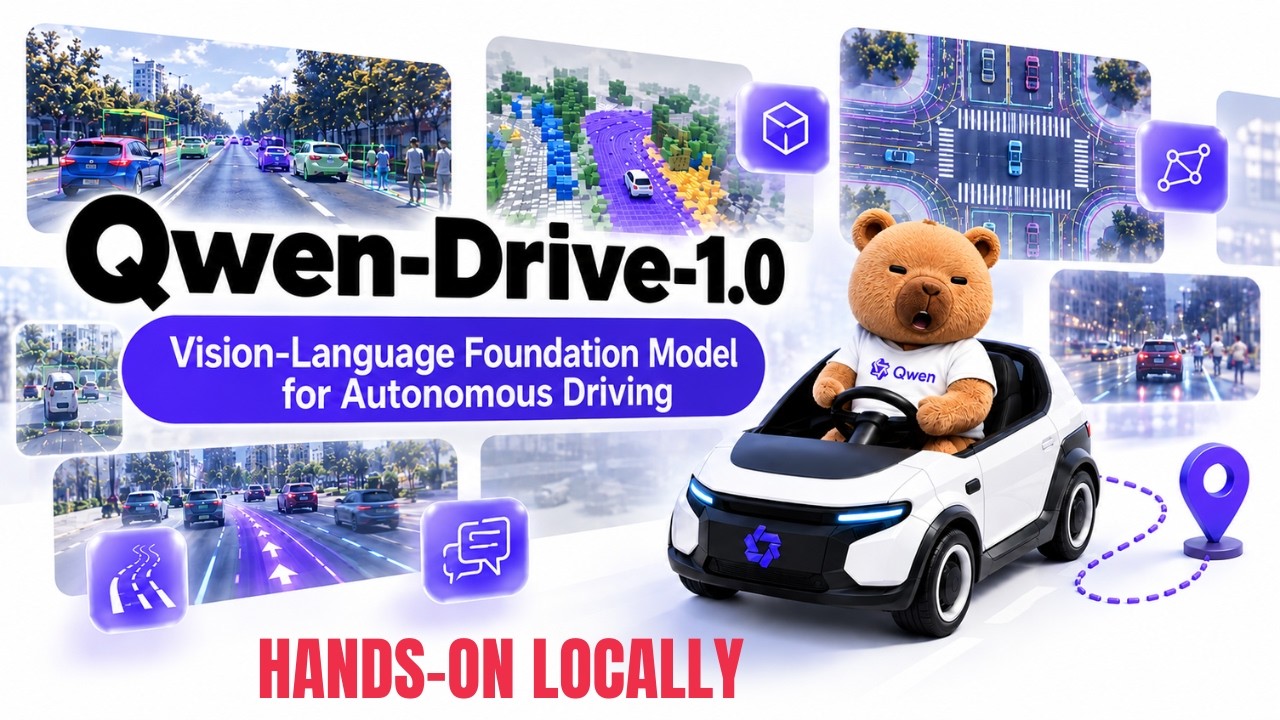
Locally installed Qwen-Drive-1.0-4B was found contradicting itself during hands-on testing.
Demonstrates running the ai-software-factory with GPT-6 Astra via a coding agent that auto-configures servers to process PRDs into validated code.
Locally installs YuE2, an open music generation model described as having frontier song quality competitive with Suno v5/v6.
Introduces edge0, an open-source streaming MoE inference framework.
Demonstrates DeepSeek V4.1 Flash hallucinations in agentic cybersecurity and coding, explains sparse attention's role in missed context, and shows methods to reduce errors using the AA Omniscience Hal
Explains DeepSeek V4.1 Flash using DeepSeek Sparse Attention and Compressed Sparse Attention 2 to limit reads to 640 entries per layer with an 890-byte KV cache per token via the lightning indexer.
Covers ChatGPT Images 2.5, Meta Muse, DeepSeek-V4.1-Flash, Anthropic warnings, OpenAI updates, Apple announcements, MAI-Image-2.6, Gemini App, Suno, Lyria 3.5, and DaVinci Resolve 21.1.
Demonstrates LiteLLM Auto Router with Pi Coding Agent, Ollama, and oMLX on Apple Silicon, comparing heuristic versus LLM classifiers for Qwen3.5 4B, Gemma 4, and Qwen3.8 27B.
Tests Nail Qwen3.6-35B-A3B-GGUF-MTP via Performance, Memory, Reasoning, OpenAI HumanEval, Kanban, Sand Physics, Dungeon Crawler, Blender and Godot on a 16GB local setup.
Compares Halogen Flash Server, EngramHalo and ROCm/Vulkan llama.cpp for Qwen3.8-Flash-Next on AMD Strix Halo via Terminal Bench Mini agentic tasks and speed benchmarks.
Locally installs OUI-1, identified as the first diffusion model built for generative UI.
Runs DeepSeek-V4.1-MLX-Q4i via Inferencer v2.2.8 on Mac Studio M3 Ultra 512, testing math, coding, logic, office apps, canvas animations, 3D simulations, games, and image generation.
Tests Ling-3.0-flash-VL, described as a native multimodal model.
Demonstrates RAG ingestion using LangChain, RecursiveCharacterTextSplitter, embeddings, and Qdrant via Docker, covering chunk sizing, cosine similarity, and metadata filtering.
Evaluates DeepSeek V4.1 Flash via browser OS tests, C++ skate and rally games, robot arm control, Subway FPS, Blender & Godot wrestling, 3D CAD models, and watch website design.
Demonstrates exposing TTS engine tuning parameters in TalkWithMe using Chatterbox, IndexTTS, and tts-serve to imbue emotion into cloned voices.
Installs and tests Nex-N2.5 mini, an agentic model, using RunPod for GPU compute.
Reviews GPT Image 2.5 against GPT Images 2 and Nano Banana 2, demonstrating sketch features, multi-turn editing, transparency, typography, spatial understanding, reference consistency and specs.
Demonstrates using Archon and SonarQube Cloud in a workflow where Sonar acts as a non-skippable security gate to catch vulnerabilities in AI-generated code before shipping.
Tests DeepSeek V4.1 Flash by building a 3D Viewer, catching an ATC bug, and solving physics problems from scratch.
Dirk, identified as Qwen 3.8 27B with modified templates, is benchmarked against Qwen 3.8 on Bob-bench to evaluate its actual performance capabilities.
Tests GLM-5.3-Flash 320B on M5 Max against Qwen3.8-Flash-Next via MTPLX, .NET migration, and SVG generation, analyzing quantization effects on memory, accuracy, and KLD.
Runs Gemma4 E4B and Qwen 3.8 27B on ZimaBoard 2 using llamacpp, comparing performance with an added RTX 2000 GPU through Kanban, Sand Physics, and Dungeon Crawler demos.
Tests Gemini 3.8 Flash performance in browser workflows, C++ game development, frontend design, FPS generation, robot arm control, and Blender and Godot workflows.
Tests DeepSeek V4.1 Flash on coding, 3D simulations, Three.js, games, agentic tasks and vision, noting speed of 300–400+ tokens per second and pricing against frontier models.
Tests Unsloth quants of GLM-5.3-Flash on GMKtec EVO-X2 using llama.cpp across four one-shot tests at low, high, and max reasoning settings.
Locally installs and tests zg (zvec-grep) powered by zvec, which unifies ripgrep, BM25, and vector search.
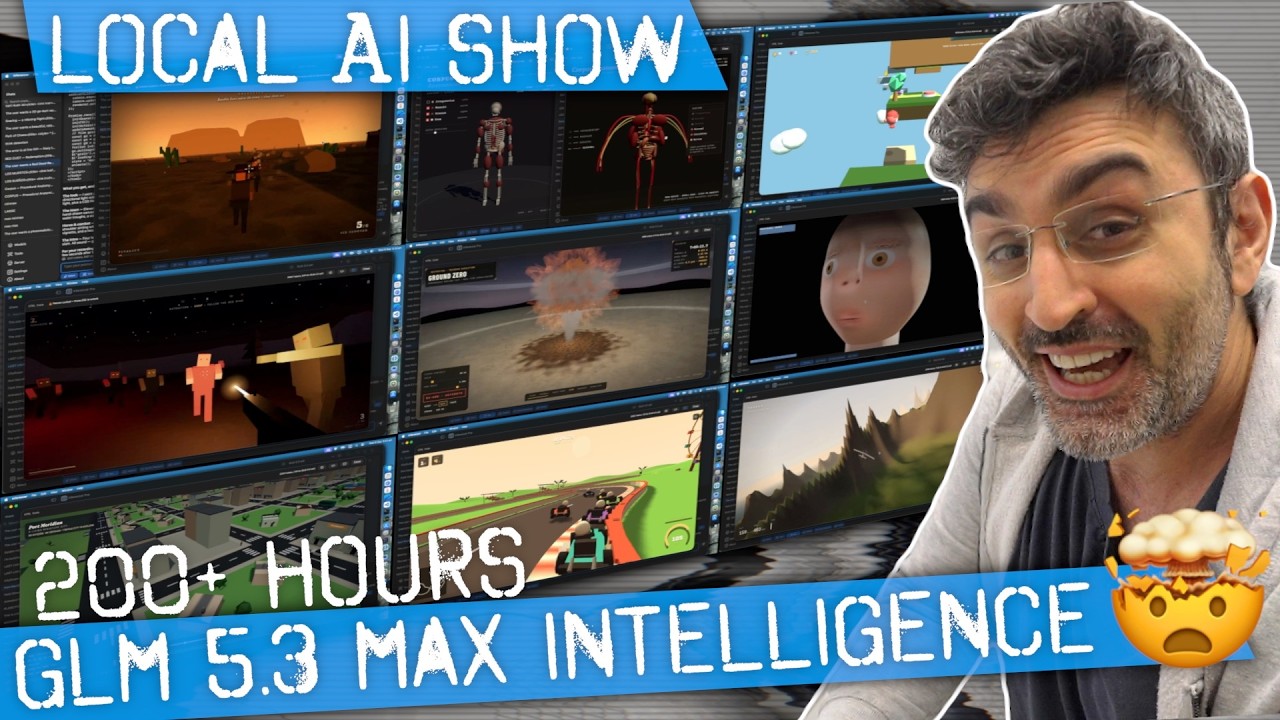
Evaluates GLM 5.3 MLX Q4i on Mac Studio M3 Ultra across Low, High, Max and MinMax thinking modes using coding tasks and complex simulations.
Ranks local coding LLMs into tiers based on quality, size relevance, and efficiency, covering Qwen variants, Dirk, OLMo, and others across different GPU constraints and quantizations.
Compares Qwen3.8-Flash-Next inference via llama.cpp, SGLang, and FreeToken on RTX PRO 6000 Blackwell using AIPerf, measuring first-token latency, decode speed, accuracy on GSM8K/MATH-500, and startup