
Video
Fahd Mirza
2026-09-23
Opus 5.5 vs GPT-6 Sol: Can AI Actually Simulate a Latte?
Compares Claude Opus 5.5 and GPT-6 Sol performance simulating a latte.
Videos
Find videos about LLM models, hardware, runtimes, benchmarks and practical AI workflows.
Compares Claude Opus 5.5 and GPT-6 Sol performance simulating a latte.

Tests Claude Opus 5.5 via browser OS, C++, Blender, Godot, Subway FPS, and an original benchmark.
Benchmarks Claude Opus 5.5 via woaibench.ai across agentic coding, complex frontend development, visual design, games, and real-world tasks, evaluating performance, speed, and efficiency per task.

Evaluates the performance requirements needed for the M5 Ultra chip to achieve its full potential.
Tests performance, memory, reasoning, OpenAI Human Eval, Kanban, Sand Physics, Dungeon Crawler, Blender, and Godot using the DavidAU Qwen3.8 27B TURBO Fable Cold Fusion GGUF model locally.
Evaluates Occamy 1.0, a model post-trained on Qwen3.6 35B A3B, against its base model using tts-serve to verify performance claims through multiple attempts and code review.
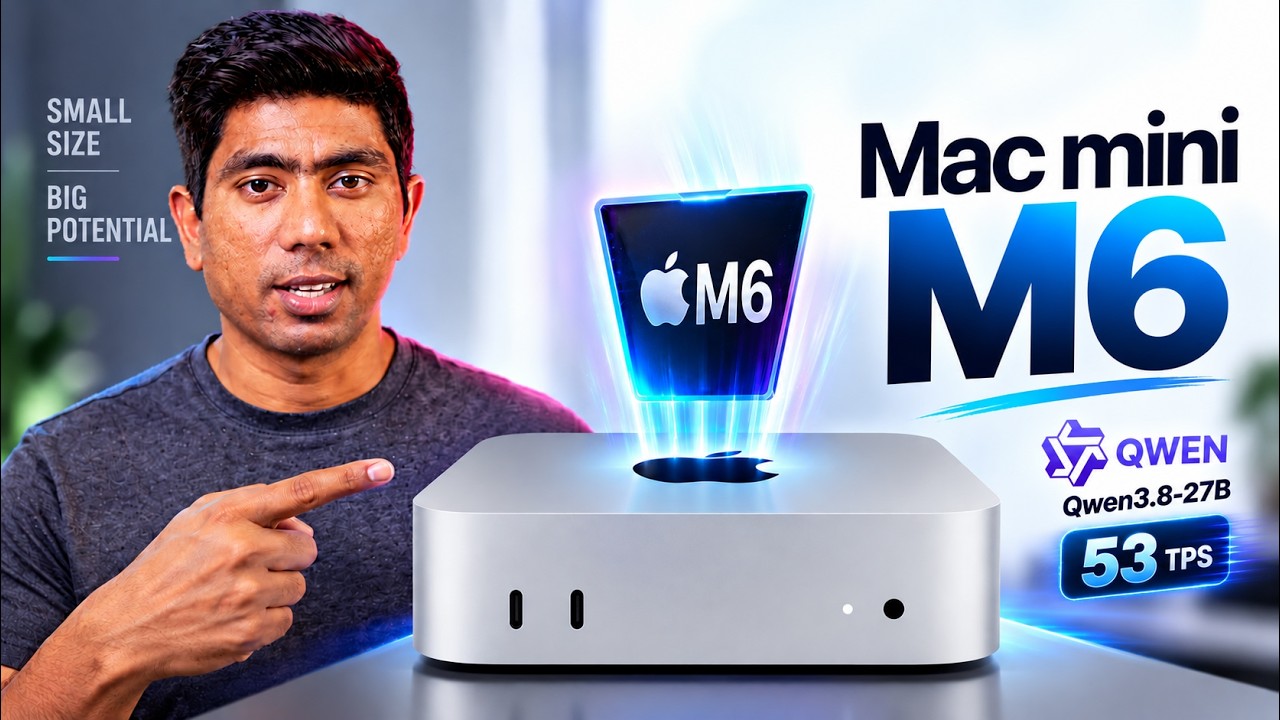
Tests Qwen3.8-27B local inference on the Apple Mac mini M6, achieving 53+ TPS while evaluating M6 chip features including CPU, GPU, unified memory, and Neural Accelerators.

Tests Xiaomi MiMo-V2.6 Pro across coding, frontend design, 3D game development, multimodal tasks, and computer use, comparing performance against other frontier AI models.

Tests MiMo-V2.6-Pro-RL, an open AI model designed to scale reinforcement learning toward self-improvement.

Review and tutorial covering installation, text-to-image generation, image editing, background removal, LoRA loading, and low VRAM setup for Qwen Image 2.1 within ComfyUI.

Hands-on test of Grok 4.7 across browser workflows, C++, robot arms, Chrono City, Blender, Godot, and FPS tasks to evaluate its performance against costs.

Evaluates Grok 4.7, described as xAI's most capable model for coding and knowledge work, using tasks involving a broken championship, a broken LED, and coffee.

Runs Qwen Image 2.1 locally on an RTX 5090 using fp8 and NF4 precisions, testing VRAM usage, render times across resolutions, and cost against GPT Image 2 and Nano Banana Pro.

Demonstrates a /v1/decision endpoint on llama-server using constrained choice, achieving 17.3 ms per decision on a 2 GB model in 2.4 GB VRAM versus 3,415 ms for JSON generation.

Runs Qwen-Image-2.1 locally on Apple M5 Max via Python to demonstrate multi-reference generation, image editing, transparent RGBA output, identity preservation, typography, and realistic portraits.

Demonstrates Jev making probabilistic decisions in ~200ms for under a cent per query, applied to gaming, pull request triage, and agent model routing within an AI coding setup.

Runs Step-5 Preview locally using Inferencer v2.4.1 on Mac Studio M3 Ultra 512 to evaluate its performance against claims of topping open weight charts.
Local installation and testing of Qwen-Image-2.1, a unified text-to-image generation and image editing model, used to prepare a royal paan.

Hands-on comparison of Qwen-Image-2.1 against Krea-2 and ChatGPT gpt-image-1.5 (2?), evaluating image quality, text-to-image generation, and image editing capabilities.

Tests Qwen3.8-LiveTranslate, evaluating its ability to name the speaker while carrying the meaning during real-time live interpretation.

Local installation and testing of RADAR, an Alibaba open-source medical AI model capable of detecting cancer and nearly 150 other conditions from CT scans.

Covers Jev, Laya, Bonsai 2 27B, Dream RSI, Gemini 3.8 Live, Qwen 3.8 Omni Flash, Qwen 3.8 Live Translate, Needle 3, ZAI infra, Xiaomi realtime RL, and an OpenAI hack report.

Evaluates Bonsai-2-27B against Qwen3.8-27B using Terminal-Bench 2.1 and SWE-bench Verified across automation, orchestration, sysadmin, cybersecurity, and complex coding tasks.

Locally installs and tests cua-s1-forms, a small, jev-like one-pass option scorer for GUI form filling.
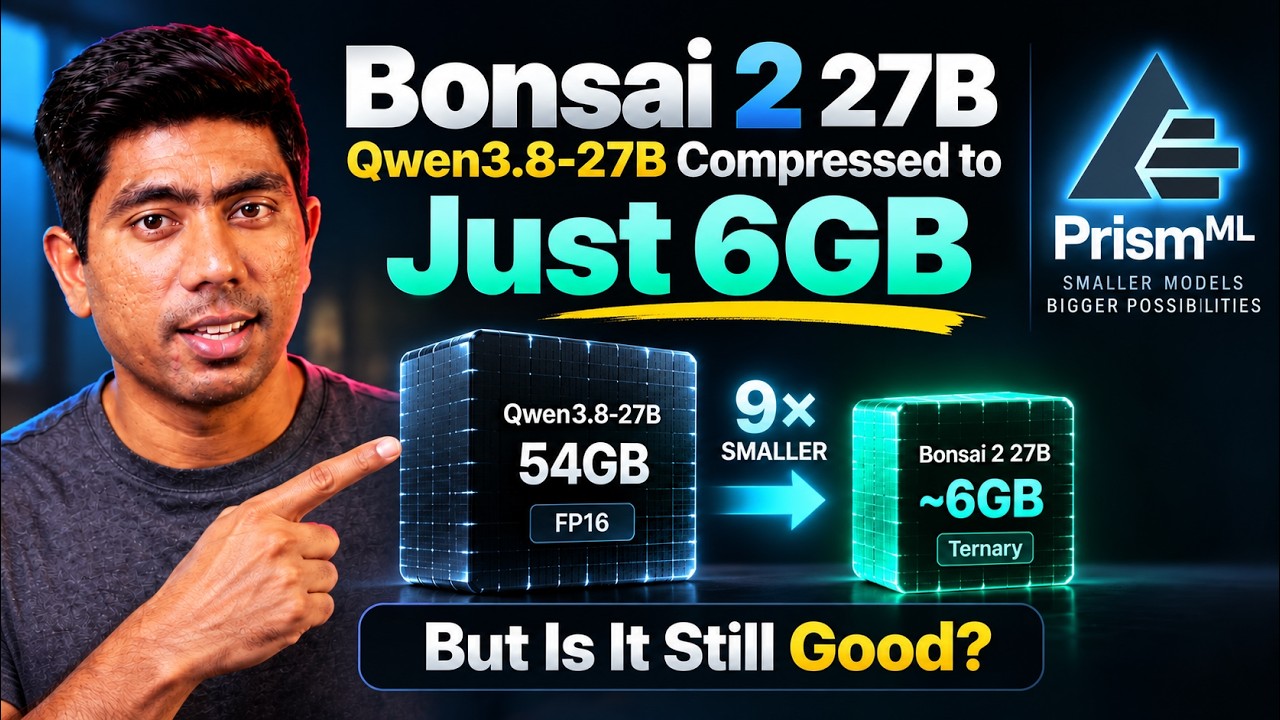
Bonsai 2 27B compresses Qwen3.8-27B from ~54 GB FP16 to ~6 GB using ternary weights, retaining ~98.2% of aggregate benchmark performance per PrismML.
Locally installed Realtime-Venus demonstrates proactive audio-visual interaction, asynchronous delegation, and interruption-aware full-duplex dialogue capabilities.
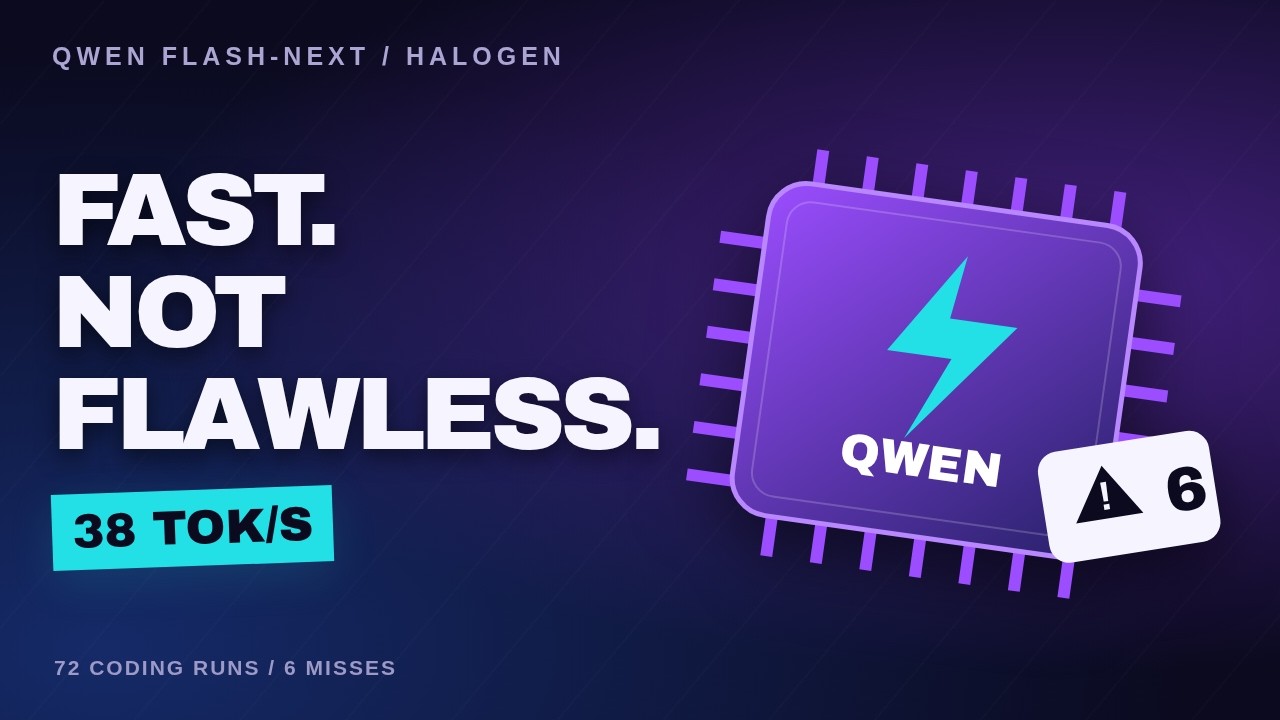
Qwen 3.8 Flash-Next ran on Halogen Flash Server via 72 coding jobs across OpenCode, dsh, and Pi harnesses on a 128 GB Strix Halo system.

Compares Bonsai 2 against Qwen 3.5 9B, Qwen 3.6 35b-a3b and Bonsai 1 using Bob-Bench scores on 8GB VRAM configurations.
Installs and compares Swift-Qwen3.8-27B with Original Qwen to evaluate whether the claim of fewer thought tokens holds true.
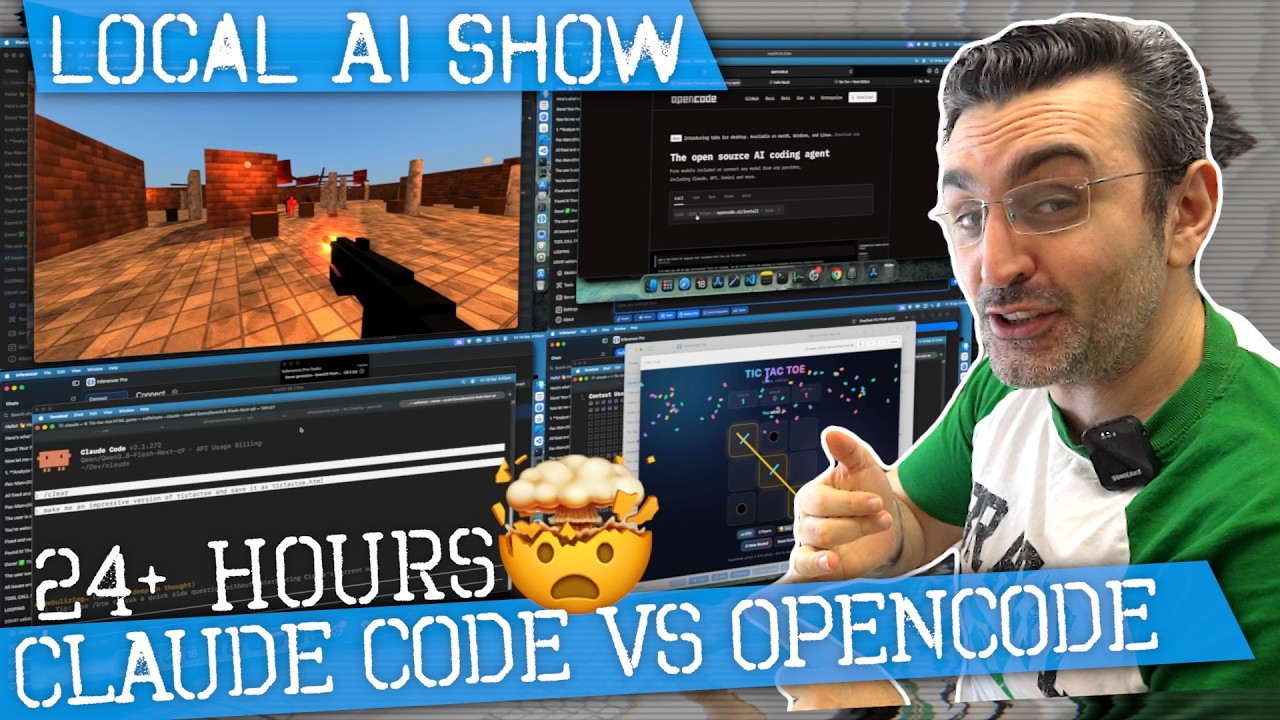
Evaluates Claude Code, OpenCode and native Inferencer using Qwen4 Exp on Mac Studio M3 Ultra via Tic-Tac-Toe generation, modifications, image inferencing and token usage comparisons.

Demonstrates configuring llama.cpp flags to achieve two to three times faster local large language model inference performance.
Demonstrates combining vibe coding with rigorous specifications through iterative refinement passes before implementing the Dust to Dominion game using an LLM to generate 100% of the code.
Covers AI pacing debate, Claude Cowork merge, Gemini Notebook study tools, Siri AI launch, Qwen3.8 Omni Flash, Meta One subscription, and UBTECH robot factory updates.
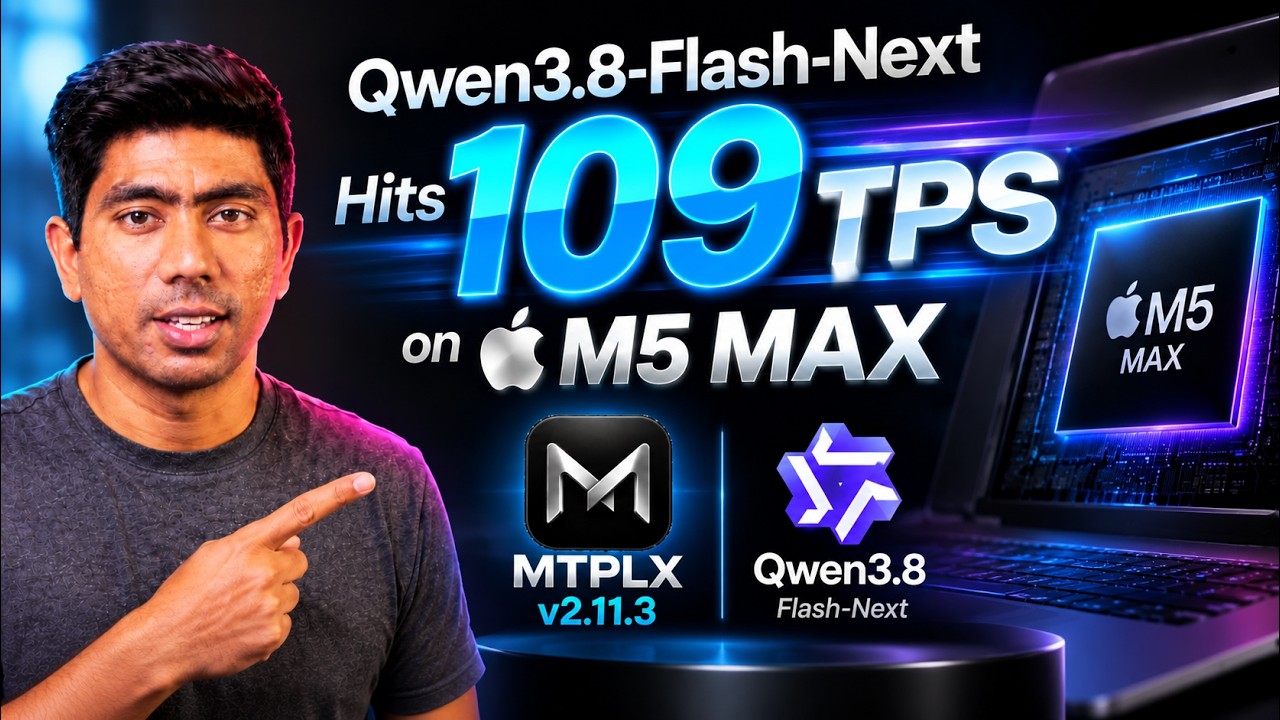
Tests Qwen3.8-Flash-Next on M5 Max using MTPLX v2.11.3, which fixes 8 defects in decoding, caching, tokenization, sampling, state restoration, and tool handling.
Tests Kimi K3 across Performance, Memory, Agency, OpenAI Human Eval, Kanban, Sand Physics, Dungeon Crawler, Blender and Godot tasks.
Locally installs and tests Ternary-Bonsai-2-27B-gguf.
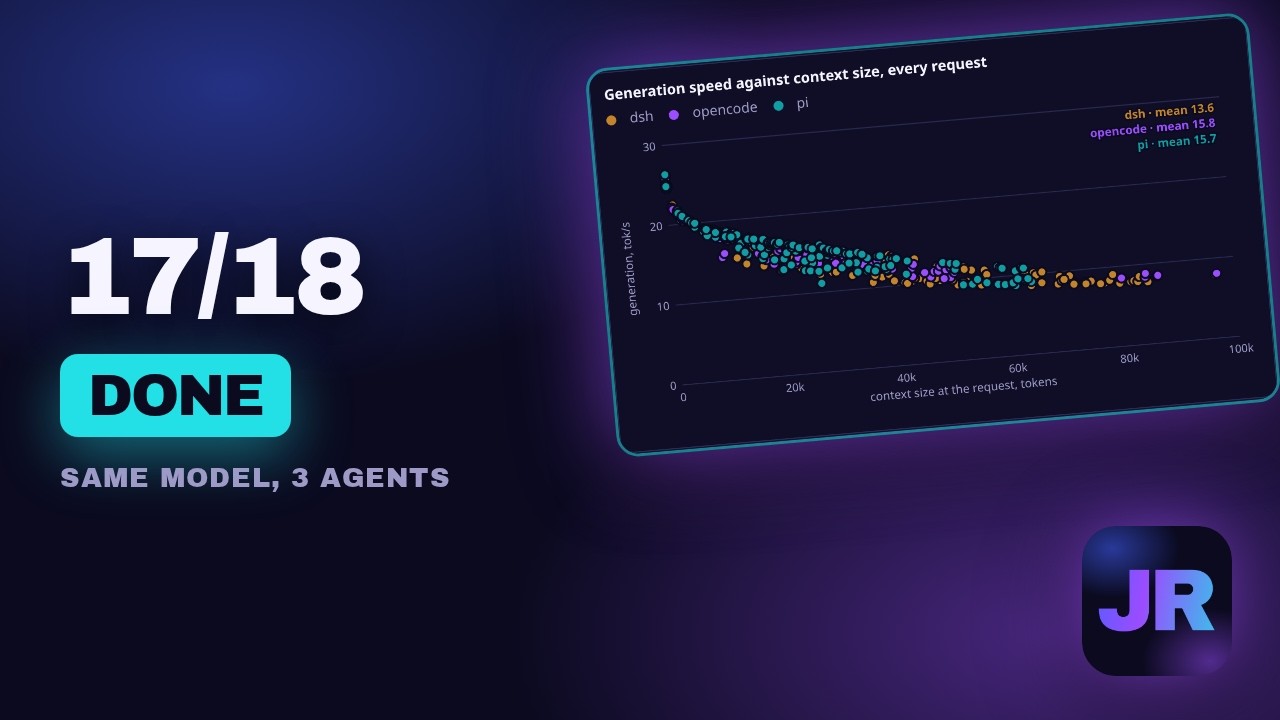
Tests Qwen 3.8 Flash-Next generation speed across OpenCode, Pi and DeepSeek Harness using 18 benchmark jobs at xhigh thinking level on a GMKtec EVO-X2 with Strix Halo hardware.
Tests Bonsai 2 27B across browser workflows, website generation, C++ game development, Blender scenes, FPS games, frontend design, image-to-SVG conversion, and simple 3D games.

Explains Deepseek V4.1 Flash architecture covering prefill versus decode, causal encoder decoder, global versus local cache, sliding window attention, CSA2, hierarchical sparse indexer, single pass mH

Tests Qwen3.8-Omni-Flash, a native omnimodal model, using images, video, and audio inputs simultaneously.

Token generation speeds were measured for Gemma 4 E2B, Gemma 4 12B, gpt-oss 20B, Gemma 4 26B, Qwen 3.6 35B, and Qwen 3.8 27B using Ollama on a Geekom A9 Max mini PC with 32 GB RAM.
Tests Spark-X2.5-4B agentic coding via Playwright MCP tool calling and .NET 10 migration, highlighting its hybrid attention architecture combining 3 sliding-window and 1 full-attention layers.

Explains how Tencent used Sherry quantization to shrink a 770B model from 1.5TB to 214GB.

Demonstrates a team brain architecture using Oracle AI Database, consolidating data from chats, repos, and docs into one table with labeling, row-level security, and MCP access for coding agents.

Tests Union Alpha, a multimodal model designed for research, coding, and agentic workflows.

Tests Qwen3.8-Flash-Next on RTX PRO 6000 with SGLang, measuring speed, BFCL, tau^2-bench, long context, strategic reasoning, SVG drawing, video editing and motion design capabilities.

Tests eight RTX Pro 6000 GPUs with 768GB VRAM installed in a Comino Grando chassis to evaluate performance limits.

Demonstrates running TalkWithMe v7.1 with LuxTTS, tts.serve v1.1, optimized STT and LLM components within 4GB VRAM constraints using maximum and minimal setups.

Compares GLM 5.3 and GLM 5.3 Flash architectures via config rebuilds, detailing DSA/KDA layer stacking, lightning indexer usage, MoE routing, MTP draft layers, and KV cache calculations.

Evaluates Qwen 3.8 Max via ClinePass using performance, memory, agency, OpenAI Human Eval, Kanban, Sand Physics, Dungeon Crawler, Blender and Godot tests within the Cline agent.