Kimi K3 Is INSANE – Is THIS a Sol & Fable Competitor?
Tests Kimi K3 capabilities via browser OS, C++ skate game, frontend design, 3D model print, subway FPS, city timeline, book website, and agent swarm cinema game tasks.
Videos
Find videos about LLM models, hardware, runtimes, benchmarks and practical AI workflows.
Tests Kimi K3 capabilities via browser OS, C++ skate game, frontend design, 3D model print, subway FPS, city timeline, book website, and agent swarm cinema game tasks.
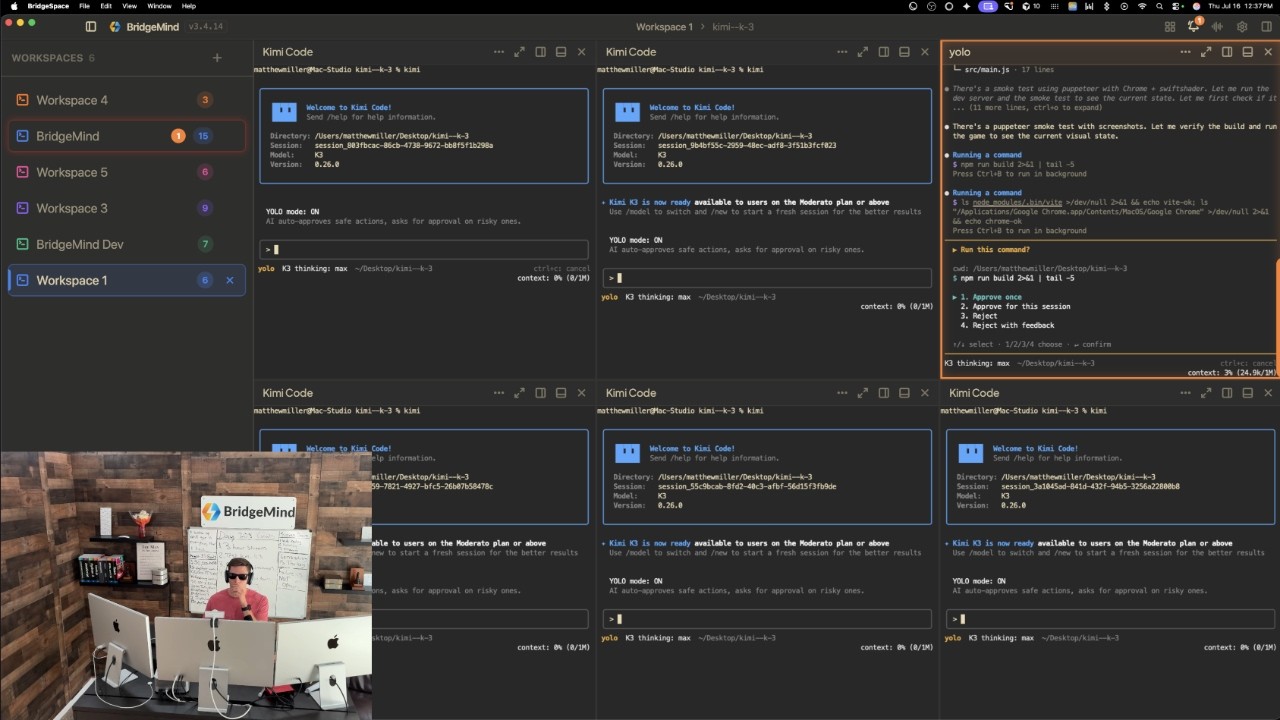
Tests Kimi K3, a 2.8T-parameter model based on Kimi Delta Attention architecture, covering sizing, benchmarks and multiple test results.
Evaluates Kimi K3 via BridgeBench using vibe coding workflows, multi-agent orchestration in BridgeSpace, and production bug fixes, comparing it against Claude Fable 5, GPT 5.6, and Claude Opus 4.8.
Demonstrates enabling the experimental LLM auto-tag feature in the ICE extension via web UI, then automating directory processing using ImageViewer, curl, and Java.
Builds a desktop app extracting text from images and PDFs using Qwen 3.6 locally, demonstrating development workflow and OCR testing without cloud APIs or subscriptions.
PrismML Bonsai 27B binary 1-bit, ternary, and full-precision models are benchmarked on website generation, FPS-style game creation, agentic coding, codebase understanding, and frontend design.
Full Fine-Tuning and LoRA are compared on an Apple M5 Max with 128GB unified RAM using a BERT-based text classification model, tracking RAM usage, training time, and parameter updates.
Flagship-scale models 1-Bit Hy3, Ternary Bonsai, and Colibri are presented as open-source local AI options compact enough for home deployment.
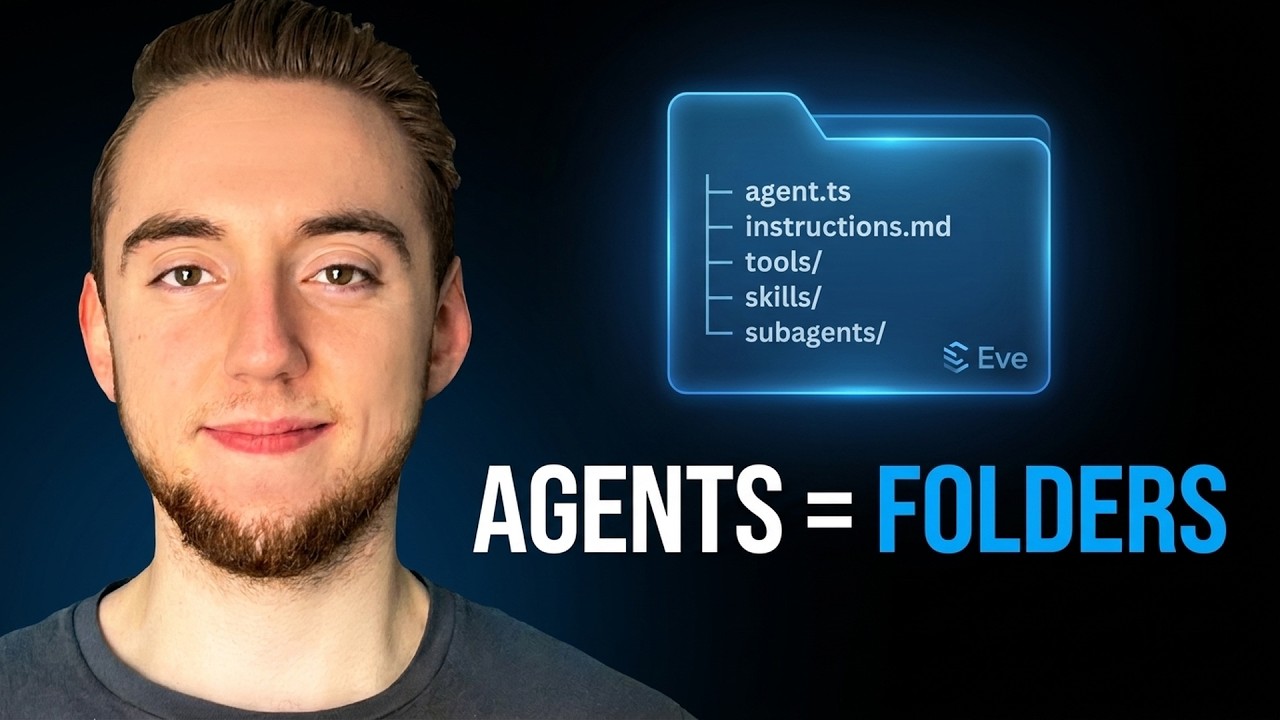
Demonstrates using Vercel's open-source Eve framework to scaffold, run and deploy a data analyst agent via Claude Code and Vercel's plugin, featuring markdown-based configuration, durable execution an
Tests Inkling, a 1T parameter open-weights model from Thinking Machines, across browser workflows, scene generation, C++ game creation, frontend design, roleplay, creative writing, 3D CAD modeling, an
Demonstrates ChatGPT 5.6 features including Codex, Sites, scheduled tasks, logged-in browser research, and the Wolf Control Tower via daily prompt workflows and community-built applications.
Tests Inkling 1T, a general-purpose multimodal model by Thinking Machines.
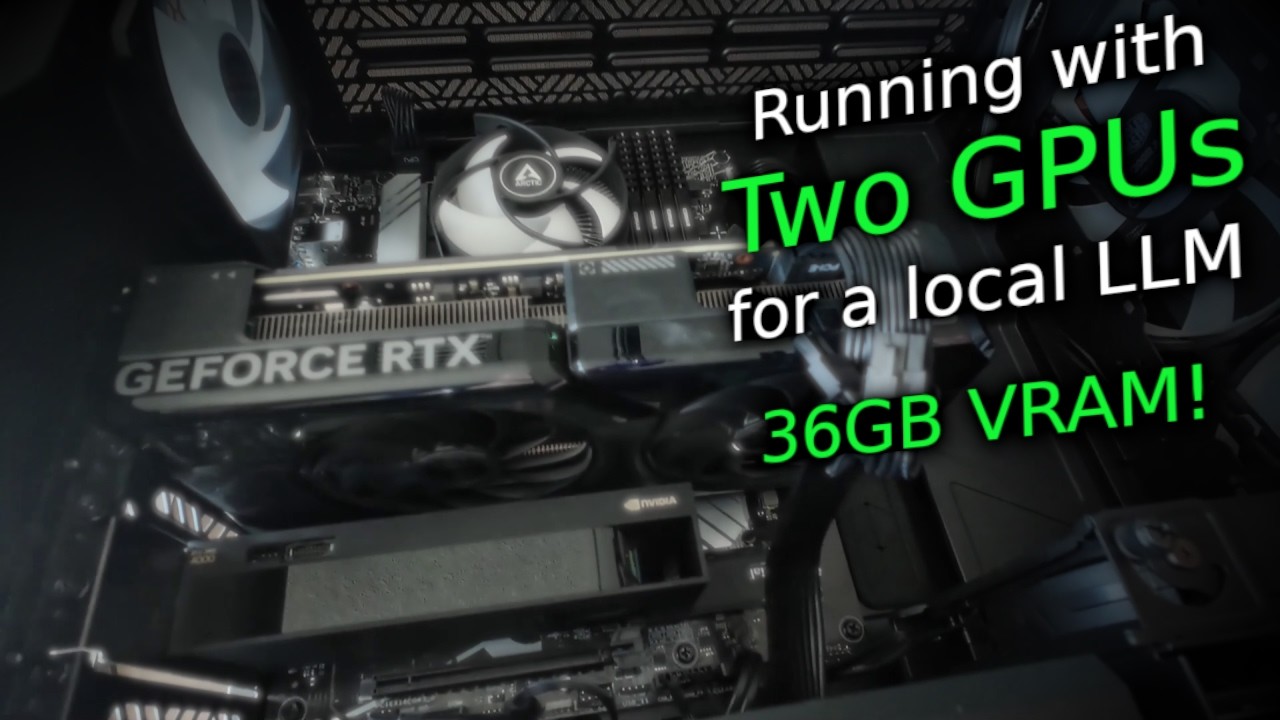
Demonstrates setting up llama.cpp for multi-GPU support using combined VRAM from merged systems, showing configuration steps and examples of running single or concurrent local LLMs.
Tests an unusual dual-Intel GPU card to evaluate whether achieving 192GB of VRAM in a single PC configuration provides viable performance without requiring NVIDIA pricing structures.
Compares Qwen 3.7 Max and Qwen 35B A3B using Performance, Memory, Agency, Driving Game, Kanban, and Codebase Prompts tests.
Locally installs and tests Ternary Bonsai 27B GGUF, demonstrating full 27B-class reasoning using ternary transformer weights.
Tests PrismML Bonsai 27B using Hermes, OpenClaw, a local coding agent for a Pi extension, and analysis of hundreds of MB of JSONL data to evaluate its capability beyond benchmarks.
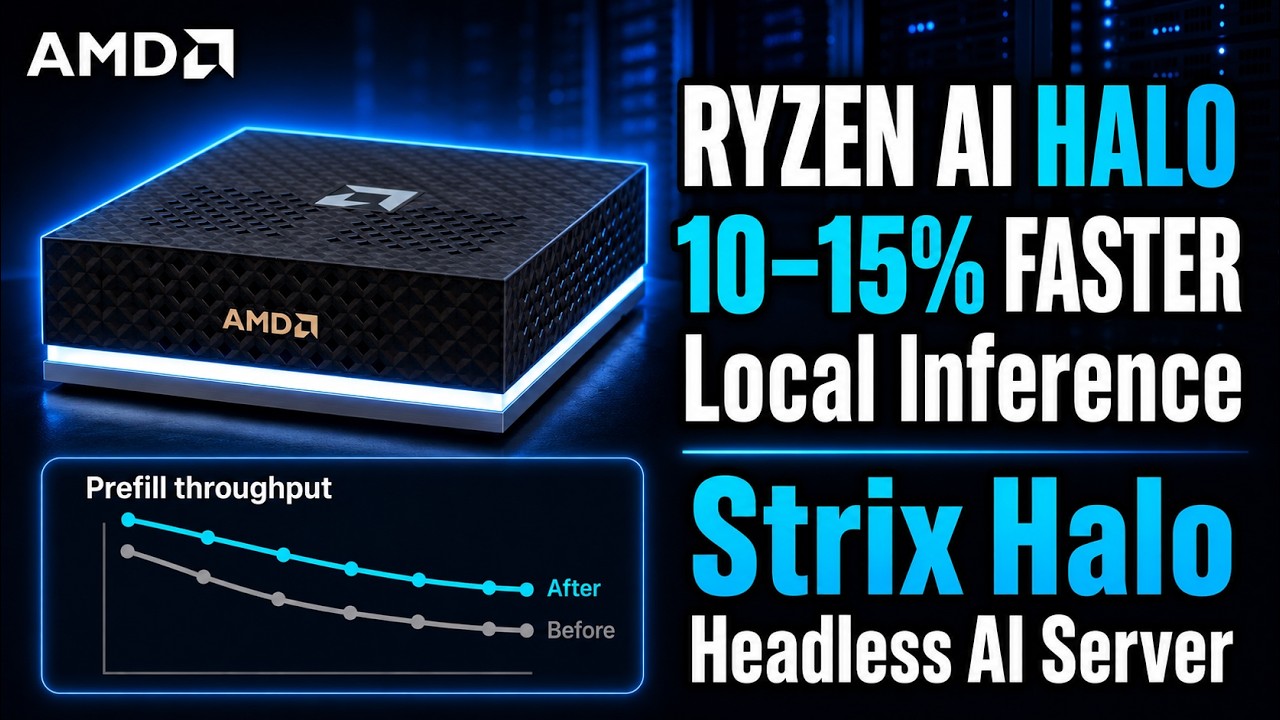
Configures Ryzen AI Halo with Ryzen AI Max+ 395 APU for headless inference via multi-user mode, 124GB GTT, performance mode, and disabled IOMMU, demonstrating setup with llama.cpp, vLLM, ComfyUI, Lemo
Demonstrates building documents, slides, websites, data sheets and podcasts simultaneously with one prompt using Skywork's autonomous AI workforce.
Evaluates AI assistants for creative writing across proofreading, literary review, and AI slop risks, while comparing cloud versus local deployment options.
Demonstrates creating seamless location jumps using matching poses and keyframes uploaded into Runway's Seedance 2.0, Kling, or Leonardo to generate smooth transitional clips.
Compares GPT-5.6 Sol and Claude Fable 5 on 3D model creation, an AI magazine project, a retro Mac GTA-style game, an Apple Vision Pro app, and UltraCode gameplay.
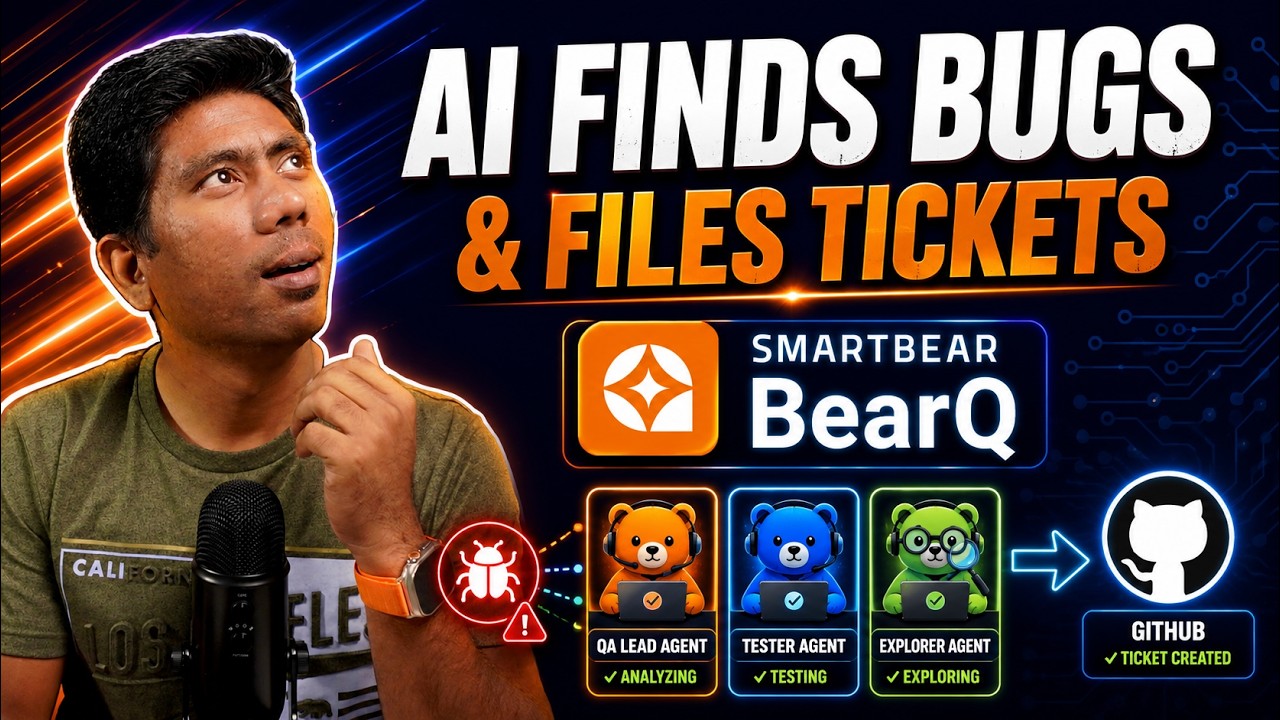
BearQ explores apps, detects issues like missing salary validation, and uses a connected GitHub MCP server to auto-create detailed GitHub issues with reproduction steps.
Tests Meta Muse Spark 1.1 against Claude Opus 4.8, Grok 4.5, and GPT-5.5 via woaibench.ai across coding, agentic workflows, computer use, multimodal reasoning, and long-context tasks.
Installs Colibri and runs full GLM 5.2 locally without GPU using JustVugg/colibri.
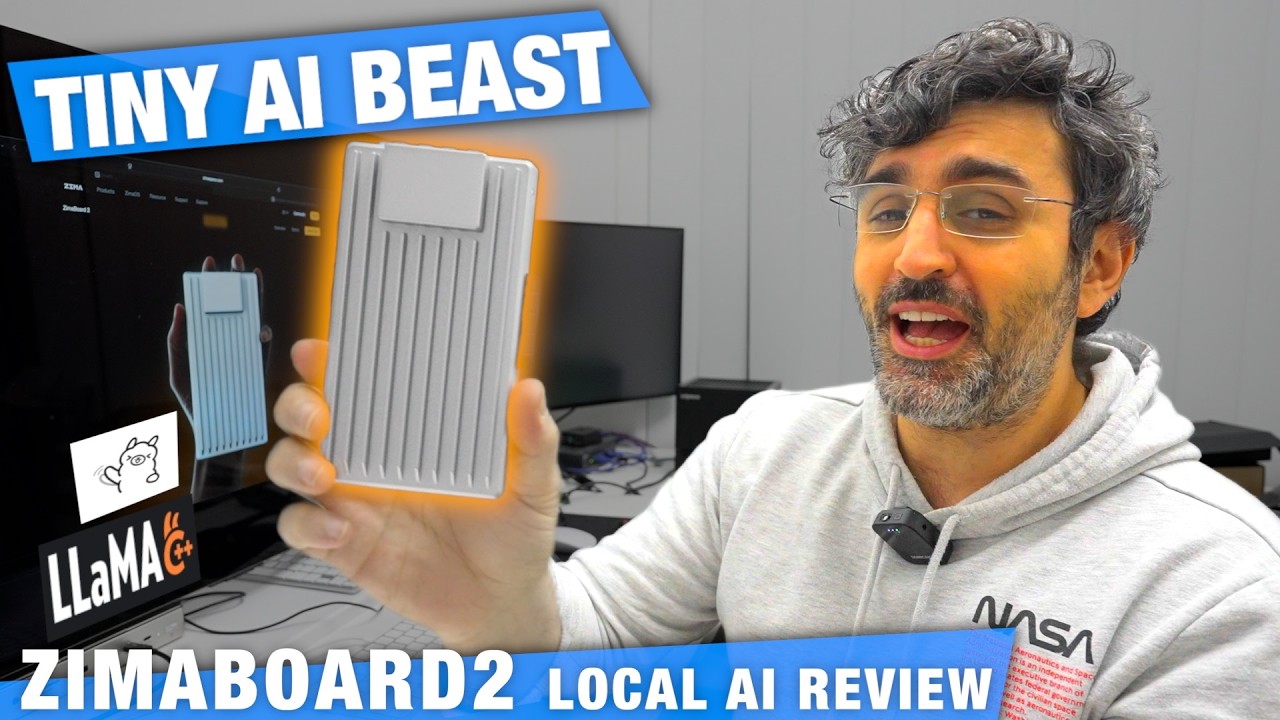
Tests Ollama and Llama.cpp running inside Docker on ZimaBoard 2, evaluating speed using Gemma-4 with Vision and GPT-OSS from OpenAI, plus an endurance thermal throttle check.
Locally installs and tests OpenLumara, a modular, token-efficient AI agent framework written from scratch.
Demonstrates building a Chrome extension using the GLM 5.2 model, detailing installation via Developer Mode and loading unpacked files.
Qwen 3.6 and Gemma 4 variants are tested to design and build a full-screen visualizer using MusicPlayer, with results hosted in the ext-mp-ai-visualizers repo.
Demonstrates Manus AI Agent building native Windows apps, mobile app remote demos, build automation, troubleshooting, marketing video creation, and icon generation.
Compares Intern Science Agents A1 35B MoE against Qwen 3.6 35B A3B via Performance, Memory, Agency, OpenAI Human Eval, Sand Physics and Dungeon Crawler tests on a 16GB local setup.
Explains FTPO and local testing for Qwythos-9B-v2, which retains deep chain-of-thought reasoning while fixing the looping bug found in the base Qwythos model.
Demonstrates understory, a local memory layer using markdown files, OKF spec, and MCP protocol with a librarian agent running on llama.cpp for shared knowledge across multiple AI setups.
Claude Fable 5 and GPT-5.6 Sol are evaluated using a single complex prompt requiring generation of a rotating döner kebab with real fire physics and fluid dynamics.
Claude Code and Archon generate a batch of finished, human-approved video ads from a product catalog using Higgsfield.
MOSS-Transcribe-Diarize 0.9B performs end-to-end long-form multi-speaker transcription, diarization, timestamp generation, and acoustic event awareness.
Covers updates on GPT 5.6, Grok 4.5, Seedream 5 Pro, Muse Spark 1.1, LingBot World 2, GPT Live, ABot World, ProxyPose, SeFi image, PixWorld, Wan Streamer 0.2, Mira, Humanoid surgery, Booster T2, Alaya
Locally installs and tests SIE, an open-source inference engine serving embeddings, reranking, and entity extraction.
Tests Meta Muse Spark 1.1 via castle scene generation, browser workflows, C++ games, frontend design, multimodal coding, 3D modeling, creative writing, timelines, and FPS games.
Locally installs and tests Tess-4-27B with an EAGLE-3 speculative-decoding draft head using migtissera/Tess-4-27B-EAGLE3.
Demonstrates parsing invoices and contracts with Upstage Studio integrated via MCP server into Claude Code to extract structured data such as dates, totals, and vendors into an Excel sheet.
Demonstrates building coding agents in OpenCode using a network proxy, creating Ranger 1 and GrizzledSeniorDev agents, and augmenting them with skills through examples.
Benchmarked a local AI model hidden inside macOS 27 on a $10,000 Mac Studio to evaluate its performance speed.
Covers updates on GPT-5.6, ChatGPT Ambitious Work, GPT-Live, SolBonk Game, Grok 4.5, Muse Spark 1.1, Muse Image, Claude Fable 5, Cowork, Reflect, Global Workspace, Google Photos Video Remix and Seedre
Demonstrates building a support agent using Pydantic AI 2.0 capabilities, which bundle instructions, tools, and settings, showing reusability across different agents without code changes.
Locally installed lift extracts structured JSON from PDFs and images across 10 languages using schema-based processing.
Benchmarks GPT-5.6 Sol, Terra, and Luna against Claude Fable 5, Grok 4.5, and GLM 5.2 via Artificial Analysis, OSWorld, Terminal-Bench, coding, frontend generation, and cost evaluations.
Reviews GPT 5.6 against Claude Fable via demos of realtime anime, liquid simulation, music, 3D modeling, math, cancer ID, deep research and financial presentations.
Tests GPT-5.6 via browser workflows, Apple Vision Pro apps, hardware drivers, city timelines, skydiving simulations, Subway FPS games, and frontend websites.
Muse Spark 1.1 is introduced as a strong agentic and coding model offered at a very low price.