Qwen3.7 Max vs Qwen3.6 27B | Head to Head Battle
Evaluates instruction adherence, UI cleanliness, functionality, and handling of complex browser-based coding prompts using identical single-file HTML, CSS, and JavaScript tasks for an iPhone Mockup, H
Videos
Find videos about LLM models, hardware, runtimes, benchmarks and practical AI workflows.
Evaluates instruction adherence, UI cleanliness, functionality, and handling of complex browser-based coding prompts using identical single-file HTML, CSS, and JavaScript tasks for an iPhone Mockup, H
Evaluates unsloth/gemma-4-12b-it-GGUF on a system with 16GB VRAM and 32GB DDR4 RAM across memory, agency, reasoning, implementation, audio and vision tasks.
Locally installs and tests Ideogram 4, described as Ideogram's first open weight text-to-image model, using weights from huggingface.co/ideogram-ai/ideogram-4-fp8.
Installs the self-improving agent skill from ClawHub, configures hooks in openclaw.json, and verifies OpenClaw reads learnings.md to apply stored preferences across sessions.
Compares Gemma4 12B against Qwen3.6 27B using the same GPU setup.
Compares multiprocessing, batching, and distributed compute speed using Inferencer App v2.0 on M3 Ultra 512GB and M4 Max 128GB systems.
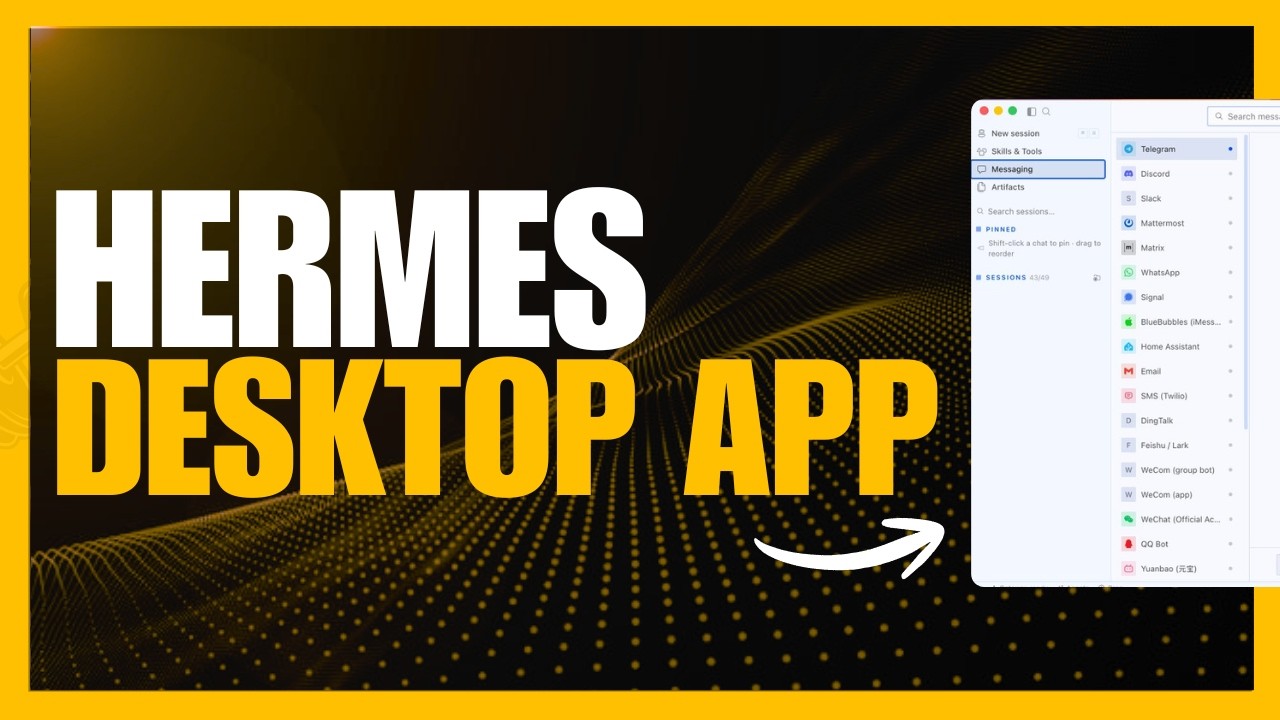
Demonstrates the Hermes Desktop App by Nous Research, featuring persistent memory, self-improving skills, browser automation, and multi-agent workflows across Windows, macOS, and Linux.
Tests Qwen 3.6 35B A3B versus Qwopus 3.6 35B A3B using an Expense Tracker, Card Matching Game, and Breakout Game coding test suite on a system with 16GB VRAM and 32GB DDR4 RAM.
Tests Gemma-4-12b-it vision, security via Splunk CTF and AWS S3 investigation with Anvor AI, tool-calling, and building a game with Pi on NVIDIA or AMD GPUs.
Demonstrates a workflow using Opus 4.8 for planning and wiring, and Gemini 3.5 Flash for frontend design, integrated via Claude Code and Pi to build applications.
Tests Gemma 4 12B via local setup config and practical evaluations including browser OS, 3D printer simulation, image to SVG, scene generation, multimodal websites, wireframe to site, and OpenCode tas
Locally installed Gemma 4 12B encoder-free model demonstrates unified architecture through text inference, coding, multilingual translation, image understanding, OCR, and audio transcription demos.
Claude Opus 4.8 and Qwopus 27B deploy web projects on Ubuntu VPS, then sabotage and repair each other's sites to evaluate server setup, coding, deployment, debugging, and troubleshooting skills.
Demonstrates setting up a cron job in OpenClaw with the Yahoo Finance MCP server to automatically fetch US stock market news and deliver results to Telegram.
Tests Qwen3.7 Plus via browser OS, OpenCode subway FPS, C++ skate game, custom frontend, flight simulation, roleplay, interactive website, and drum kit simulation.
Demonstrates setting up Mem0 for OpenClaw via plugin installation, OTP verification, and openclaw doctor configuration, concluding with a live Telegram stock research query showing automatic context r
Locally installs and tests Hermes Agent Desktop with an Ollama-based model, providing a walkthrough covering installation, architecture, and live demo.
Hermes Agent connects to Luce DFlash server with adaptive PFlash compression, demonstrating real-time reduction of 3572 tokens to 148 on an RTX A6000.
Compares Qwen3.6 27B Q6 locally versus Step3.7 Flash via OpenRouter on speed, coding ability, creativity, interactivity, UI polish, and physics while building an iPhone-style UI, Sled Sketch, and Volt
Links WhatsApp to OpenClaw via plugin and QR code, locks access to a single number, and builds an automated bulk campaign agent sending messages from a CSV list using a free AI API.
Tests Gemma 4 26B A4B versus Qwen 3.6 35B A3B on a 16GB VRAM system using a six-test suite covering adherence, memory, implementation, architecture, reasoning, and agency.
Compares GPT-5.5, Claude Opus 4.8, and Gemini 3.5 Flash via World of AI Bench on coding, frontend design, agentic workflows, debugging, game dev, and creative tasks, covering reasoning levels and harn
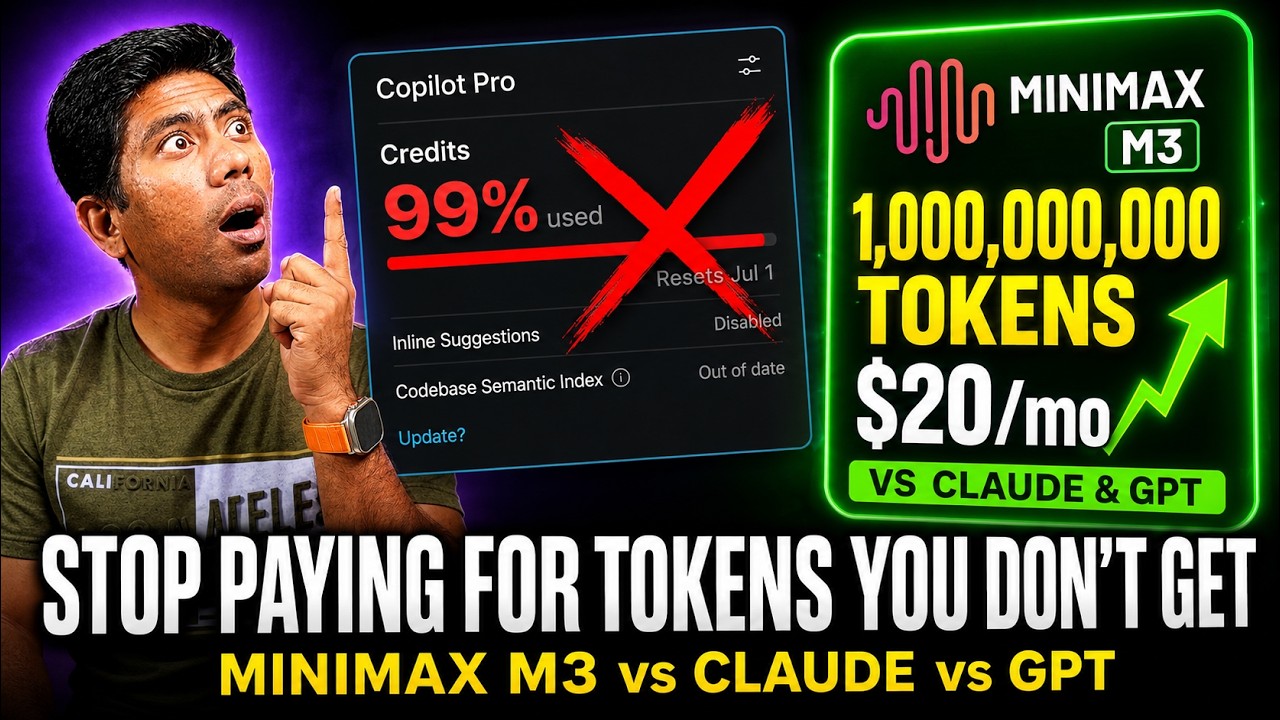
Compares MiniMax M3 pricing against Claude Sonnet 4.6, Claude Opus 4.8, and GPT-5.5 for AI coding and testing workflows.
Locally installs and tests NVIDIA Cosmos, a world foundation model platform for accelerating Physical AI development, using the nvidia/Cosmos3-Nano variant.
Explains the OpenClaw search router flow and configures Tavily plus Ollama web search via openclaw configure, then tests the resulting priority order live in Discord.
Demonstrates PiD Pixel Diffusion by Nvidia for high-resolution images via ComfyUI workflows, comparing performance against SeedVR2 and integrating Gemma 2b, Qwen3 4b, VAE and Z-image components.
Local installation and testing of LocateAnything, an NVIDIA VLM for high-quality visual grounding, precise object localization, dense detection, and point-based localization.
Demonstrates configuring OpenClaw to run an independent stock-researcher agent in a Telegram group using a Yahoo Finance MCP server and a free AI API.
Compares Qwen3.6 27B Q8 MTP on consumer hardware versus GPT-5.5 across speed, coding, creativity, interactivity, UI polish, game logic, physics, and single-file HTML handling via Sled Sketch, Cubicle
Demonstrates connecting OpenClaw to Telegram via BotFather, configuring the bot token and user ID allow-list in openclaw config, restarting the gateway, and verifying live replies using a free AI API.
Local testing of Step 3.7 Flash using Q4 and Q8 quantizations evaluates performance in browser OS, static scenes, games, coding, multimodal tasks, simulations, writing, and roleplay.
Reviews MiniMax M3, demonstrating its frontier-level performance on specialized tasks such as coding and agentic work.
Tests MiniMax M3 on SWE-Bench Pro, BrowseComp, SVG-Bench, KernelBench Hard, OSWorld Verified, frontend tasks, Three.js, SVG animation, and agentic workflows against Opus 4.7 and GPT-5.5.