The BEST Jev Use Cases for AI Coding (Absolute Game Changers)
Demonstrates using Jev for security hooks, gameplay testing, browser testing via Jev Ultrafast, and workflow classification within Archon workflows alongside an LLM.
Videos
Find videos about LLM models, hardware, runtimes, benchmarks and practical AI workflows.
Demonstrates using Jev for security hooks, gameplay testing, browser testing via Jev Ultrafast, and workflow classification within Archon workflows alongside an LLM.

Implementation results for Dust to Dominion using Ranger 1 coding agent are reviewed through a two-stage code review process followed by a retrospective.
Locally installs and tests onPanda, an internal tool used for LLM data annotation and model inspection.
Benchmarks GPT-6.1 Sol against GPT-6 Astra and Claude Opus/Sonnet 5.5 via WoAI Bench, covering reasoning, price-performance, Minecraft clone, frontend demo, NYC SVG demo and Elden Rings clone.
Evaluates GPT-6.1 Sol against GPT-6 via browser OS tests, C++ game dev, robot arm control, FPS gen, Jerry’s Apartment, RuneScape 2007, 3D vehicle modeling, and partial laptop repair.
Locally installs GLM-4-Voice of Reason, a speech-to-speech model developed by Kyutai that reasons before speaking.
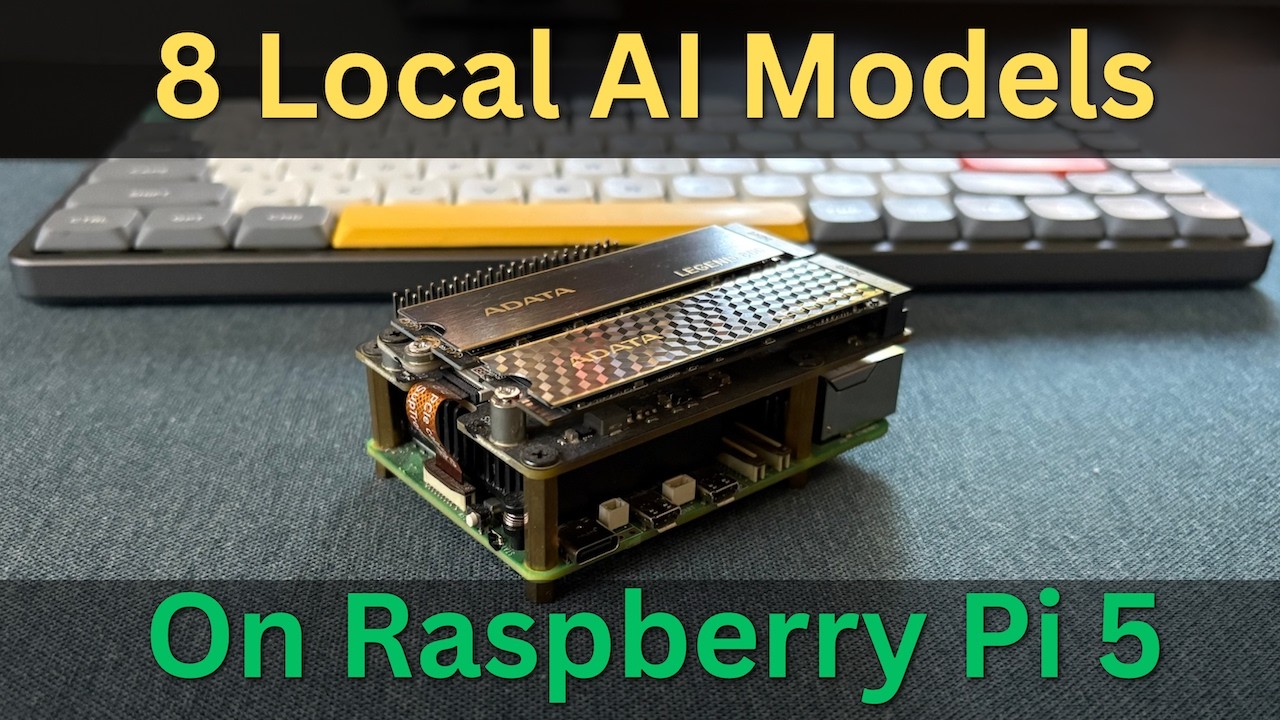
Eight local AI models were tested on a Raspberry Pi 5 using llama.cpp across summarization, sorting, email parsing, and tool calling, measuring tokens per second and time to first word.
Refines a specification for the Dust to Dominion game through six iterative passes using a local LLM to handle 100% of the coding implementation.
Compares Space Bunny Alpha via OpenRouter against local Qwen Q9 using Open Code, Inferencer, and Mac Studio M3 Ultra 512 for destruction animations, procedural faces, and live coding tasks.
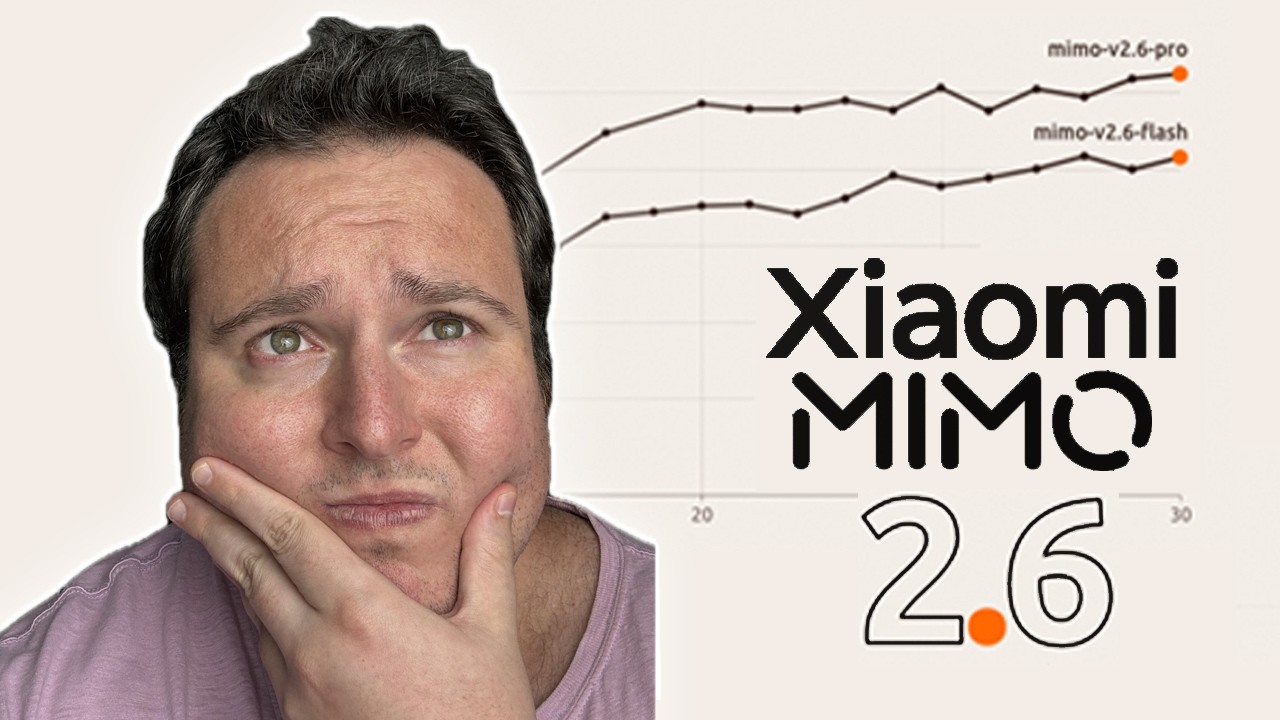
Teardown of Xiaomi MiMo V2.6 Pro and Flash configs reveals MoE routing, native 4-bit training, MTP layers, DFlash, GQA and KV cache mechanics enabling 1M context within 527 GB.
Tests Swift Qwen 3.8 27B from UkisAI on Performance, Memory, Reasoning, HumanEval Remix, Kanban, Sand Physics, Dungeon Crawler, Blender and Godot.
Local installation and testing of Xing4.0-29B-A4B, a model developed by China Telecom Artificial Intelligence Technology.
Tests Claude Sonnet 5.5 on browser OS, C++ skate games, robot arms, Subway FPS, Blender, Godot, and RuneScape PvP.
Tests dual RTX 3060 performance using llama.cpp tensor split and Raylight for Qwen 3.6 35B MoE, Qwen 3.8 27B, and MiniMax H3 video generation within a Proxmox/ZFS environment.
Tests Claude Sonnet 5.5 using a 3D game creation task, multilingual capabilities across 80 languages, scenario-based evaluations, cost analysis, and benchmark comparisons.
Benchmark tests local AI resistance to prompt injection using Pi, Oh My Pi, Codex, and OpenCode coding harnesses, comparing rankings and explaining practical defenses for agentic coding workflows.
Evaluates the BreezeBlue voice-cloning TTS engine’s claimed fine control over pace and emotion using new voices, alongside VRAM usage and TalkWithMe integration testing.
Tests GPT-6 Luna performance in browser workflows, C++ games, robot arm control, Blender, Godot, and frontend design.
Tests MiMo V2.6 Pro on Mac Studio M3 Ultra using Inferencer v2.4.2, evaluating coding, agents, and multimodal tasks alongside Artificial Analysis Intelligence Index results.
Locally installed OrcaSAQ2 27B, a high-fidelity 3-bit Qwen3.8 for long-horizon agents, is demonstrated with and without harness.
Locally installed Julia 1 converts states, questions, and answers into decisions via demos on customer anger, security traps, phishing, red flags, multilingual tests, and benchmarks against Jev.
Explains how memory bandwidth limits LLM speed using NVIDIA H100 architecture, covering warps, caching, and techniques like batching, tiling, kernel fusion, and quantisation.
Evaluates Pixel Canary against Fable and Astra using a Blender and Three.js bespoke suit configurator test and an SQL debugging test.
Overview of new AI releases including GPT 6 Sol, Grok 4.7, Opus 5.5, Gemini 3.8 TTS, and various image and embedding models.
Tests Space Bunny Alpha across browser-based workflows, C++ game development, Blender, Godot, FPS generation, frontend design, and a keypad optimization test.
CLM, Laya, OpenJev, Kev and Jev are evaluated against an angry customer scenario and a security trap test, where only two models pass.
Tests Gemma4-26B MoE, QWEN3.6-35B MoE, Bonsai 2-27B MoE, QWEN3.8-27B and QWEN3.8-27B-Splash via oMLX, MTPLX and LM Studio on Mac mini M6.
Evaluates Space Bunny Alpha using a bespoke suit configurator built with Blender and Three.js, alongside Italian newspaper headline translations where the model struggles.
Demonstrates running unsloth/Qwen3.6-35B-A3B-GGUF:UD-IQ3_XXS on 8GB VRAM using llama-server with MoE offload, evaluating speed and performance via Bob-bench Wide and ComfyUI agent tasks.
Tests Xiaomi Mimo V2.6 Pro and Flash on website generation, C++ development, 3D modeling, Chrono City generation, RuneSClone, FPS development, and skate games.
Directly tests GPT-6 Sol and Claude Opus 5.5 against each other across three tasks instead of relying on companies' claims about their own models versus competitors' previous generations.
Locally installs and tests ZDTaichu5.0-9B, a multimodal model for general visual understanding and spatial reasoning.
Demonstrates using local coding agent conversation files to improve rules via prompts or storing them in Databricks for querying with Claude Code and MCP.
Zero-shot benchmark of Laya System One, Qwen 3.5 0.8B and Qwen 2.5 0.5B on five text classification tasks using accuracy, latency and memory metrics on a MacBook Pro M5 Max.
Locally installs and tests Open Code Review, an AI-powered code review CLI tool open-sourced by Alibaba.
Tests prism-ml Ternary-Bonsai-2-27B-gguf performance, memory, reasoning, OpenAI Human Eval, Kanban, Sand Physics, Dungeon Crawler, Blender and Godot.
Tests Ming Image 0.1 Design on an RTX 5090 using FP8 conversion, generating posters, app mockups, comic panels and photo edits in about 8 seconds each.
Contrastive Language Model CLM is a System One model trained with a contrastive learning objective connecting states and actions, exemplified by CLM-v0.1-8B.
Tests whether compressing Qwen 3.8 27B to 12.1 GB preserves functionality using ISTA-DASLab's Qwen3.8-27B-GSQ-RCO-GGUF through two coding exercises.
Tests DeepSeek V4.1 Flash, Muse Spark 1.3, and GLM-5.3 against Claude Fable 5.1 using Cline Desktop and ClinePass to reproduce Subway FPS MD and C++ Race projects.
Compares Mac mini M6 and M5 Max running Qwen3.8-27B-Splash in LM Studio across sustained generation, TTFT, prefill, multi-turn context, and agentic coding via .NET migration test.
Demonstrates local usage of Nemotron 3 Diarization with Parakeet to perform speaker diarization on real-world audio using the open-weight model hosted on Hugging Face.
Evaluates Claude Opus 5.5 via Recaptcha, ray tracing, live piano, math videos, Blender VR, Unreal games, music, FROG TEST, cancer ID, deep research, ideation, specs, guardrails.
Tests building identical applications using an AI Software Factory to compare costs and results across different provider combinations.
Tests GPT-6 Sol performance on browser workflows, OSRS clone, C++ games, robot arms, FPS, frontend, Blender/Godot, iPhone apps, and websites.
Tests evaluate MiMo-V2.6-Flash on coding, secure code review, prompt-injection resistance, and prompt refusals against its benchmark performance.
Splash uses custom Metal kernels, DFlash 2 speculative decoding, and prefix-aware caching to achieve 74 tok/s for Qwen3.8-27B on M5 Pro in a short-prompt benchmark.
MiMo V2.6 Flash RL Q9 runs locally on Mac Studio M3 Ultra, covering coding, safety tests, multimodal prototypes, simulations, games, web apps, logic, math and final verdicts.
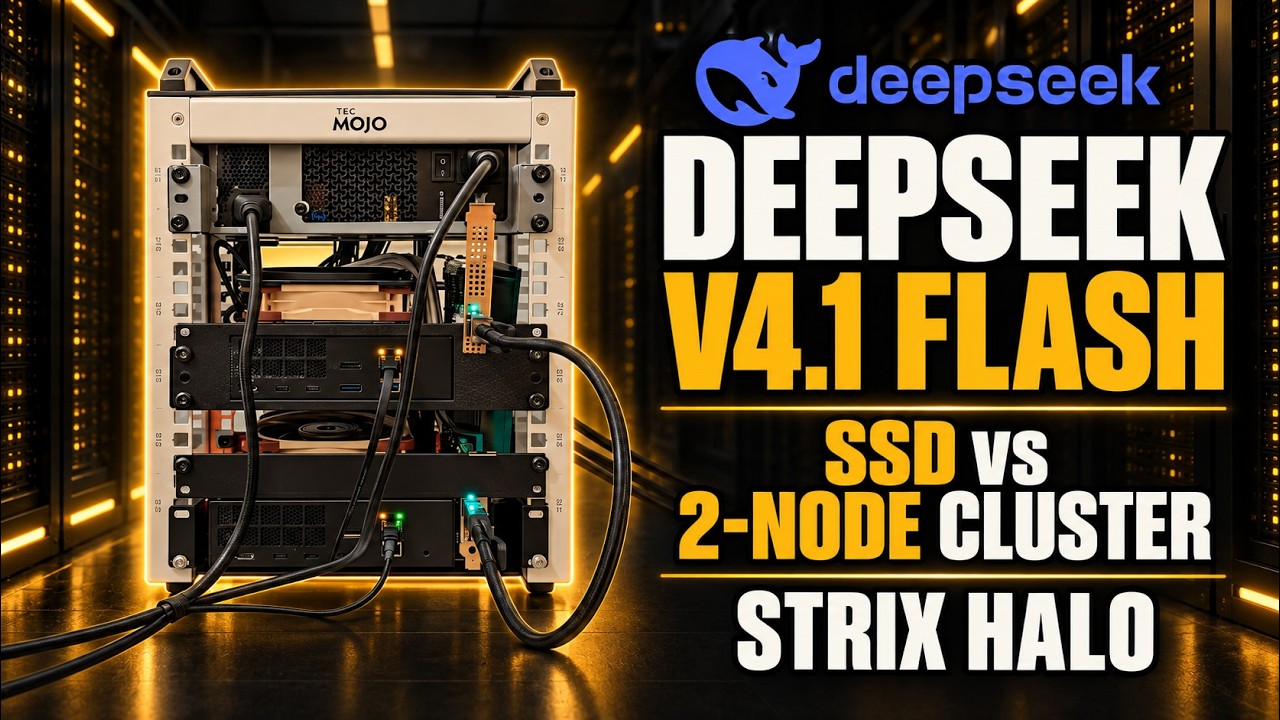
Evaluates DeepSeek V4.1 Flash via DwarfStar on AMD Strix Halo, comparing single-node SSD streaming against two-node cluster performance with prefill/decode metrics and Terminal Bench Mini scores.
WoAI Bench evaluates GPT-6 Sol against Claude Opus 5.5, testing hallucination rates and coding demos for Three.js, 3D games, and agentic tasks alongside Qwen 4 variants.